
 Facebook
 X
X
 Pinterest
 Copy Link
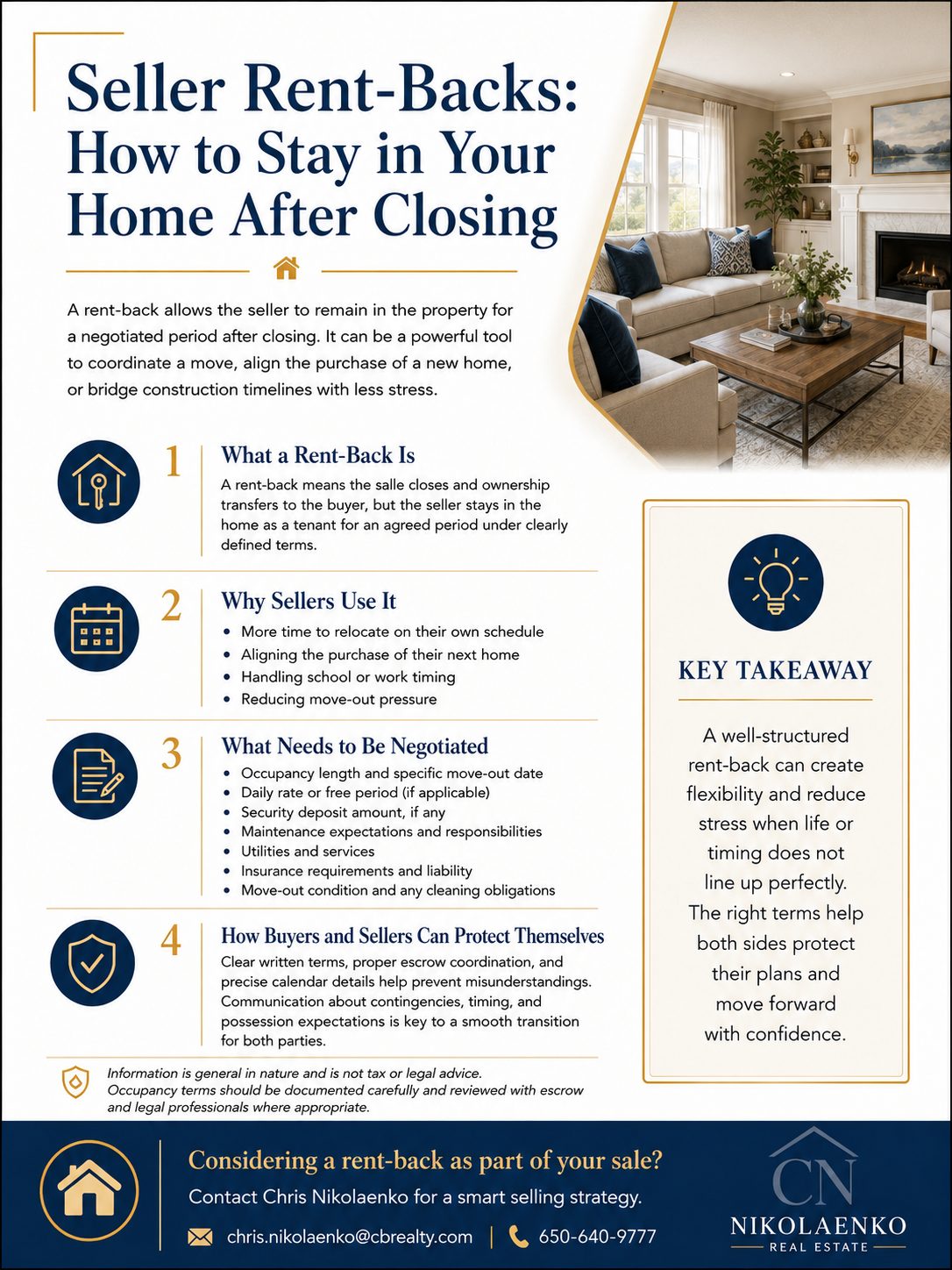
A seller rent-back allows the seller to remain in the property for an agreed period after ownership transfers to the buyer. In Silicon Valley, this arrangement can help a seller coordinate a purchase, move, school schedule, or other transition.
How a rent-back works
The sale closes and the buyer becomes the owner. The seller then occupies the home temporarily under written terms that address dates, payment, responsibilities, and condition. Depending on the length and structure, different legal rules may apply, so the agreement should be documented carefully.
Terms that deserve attention
- Move-out date and possession time
- Daily rent or a negotiated no-cost period
- Security deposit or holdback
- Utilities, maintenance, and repairs
- Insurance requirements
- Access, keys, and final condition
- Consequences if possession is not delivered on time
Benefits for sellers
A rent-back can reduce the pressure of moving before funds are available from the sale. It may also create time to close on a replacement home or arrange temporary housing.
Risks for buyers
Buyers must consider loan occupancy requirements, insurance, possession risk, and their own moving schedule. A final walkthrough before closing and a condition review at move-out can help establish expectations.
Clear communication matters
Informal promises are a poor substitute for precise written terms. Both parties should understand the timeline and consult the appropriate real estate, lending, insurance, escrow, or legal professionals.
I can help sellers and buyers evaluate whether a rent-back supports their larger transaction strategy.
