
 Facebook
 X
X
 Pinterest
 Copy Link
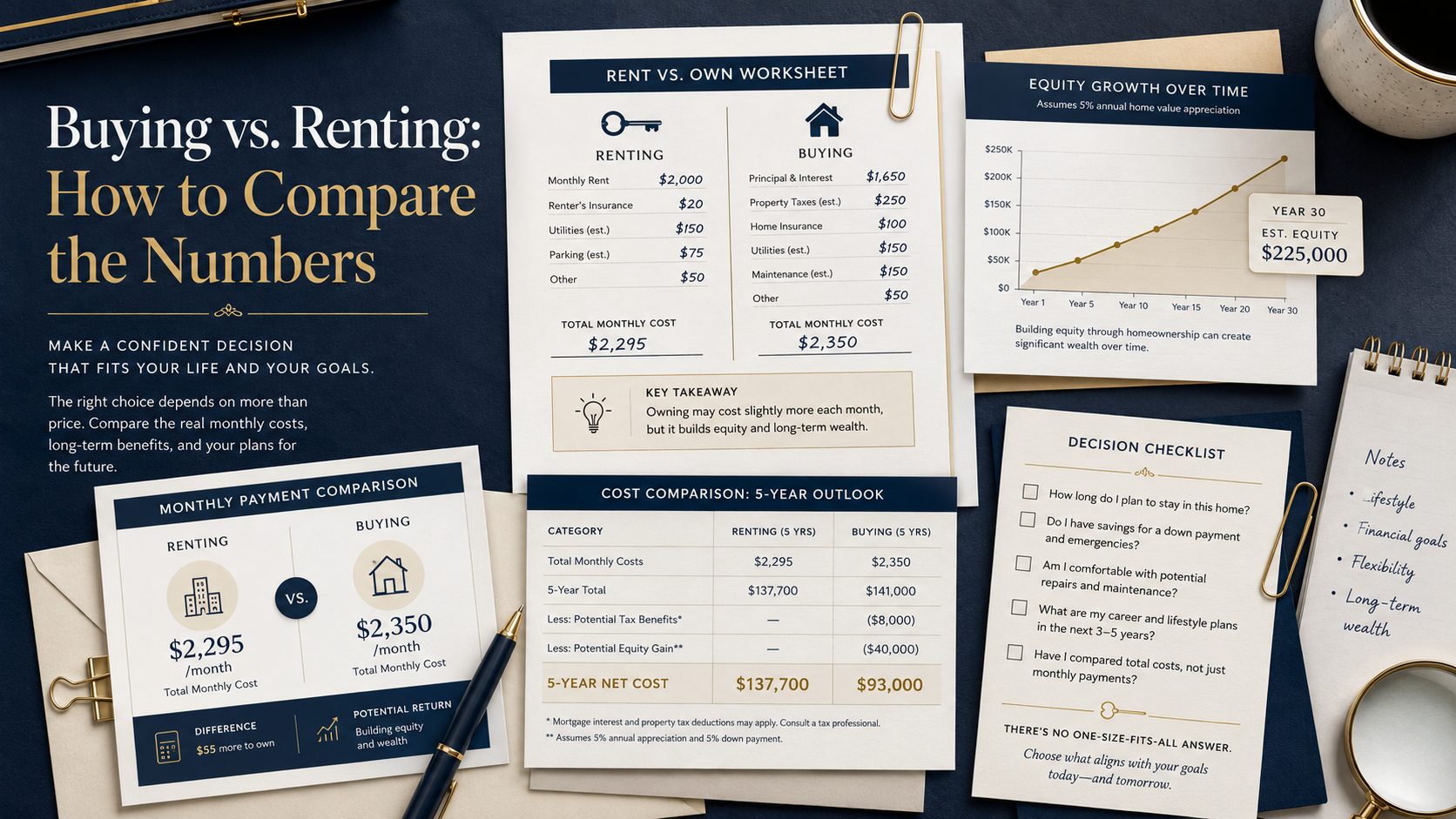
The rent-versus-buy question cannot be answered by comparing rent with a mortgage payment alone. The better decision depends on timing, total costs, flexibility, and the value you place on stability and ownership.
Compare complete monthly costs
For ownership, consider principal, interest, property taxes, insurance, HOA dues, maintenance, and utilities. For renting, include rent, renters insurance, parking, expected increases, and moving costs.
Account for cash required upfront
Buying usually requires a down payment, closing costs, reserves, and possibly immediate repairs. Renting may require deposits and moving expenses but generally preserves more liquidity.
Think in years, not months
Purchase and sale costs are spread over the time you own the property. A five-year framework can be more useful than a one-month comparison, especially if job, family, or location plans may change.
Recognize what equity does and does not mean
Part of a mortgage payment may reduce principal, and appreciation can increase equity. Neither is guaranteed. Ownership also concentrates money in one asset and can involve significant maintenance or market risk.
Value flexibility honestly
Renting can make relocation easier and shift repair responsibility to a landlord. Buying can provide control over the home, more predictable occupancy, and potential long-term wealth building.
Run scenarios
Test different appreciation rates, rent increases, mortgage rates, maintenance costs, and expected holding periods. The result should support your real life, not a generic rule.
I can help you evaluate local prices and property options while your lender and financial or tax advisors help assess the broader financial picture.
