
 Facebook
 X
X
 Pinterest
 Copy Link
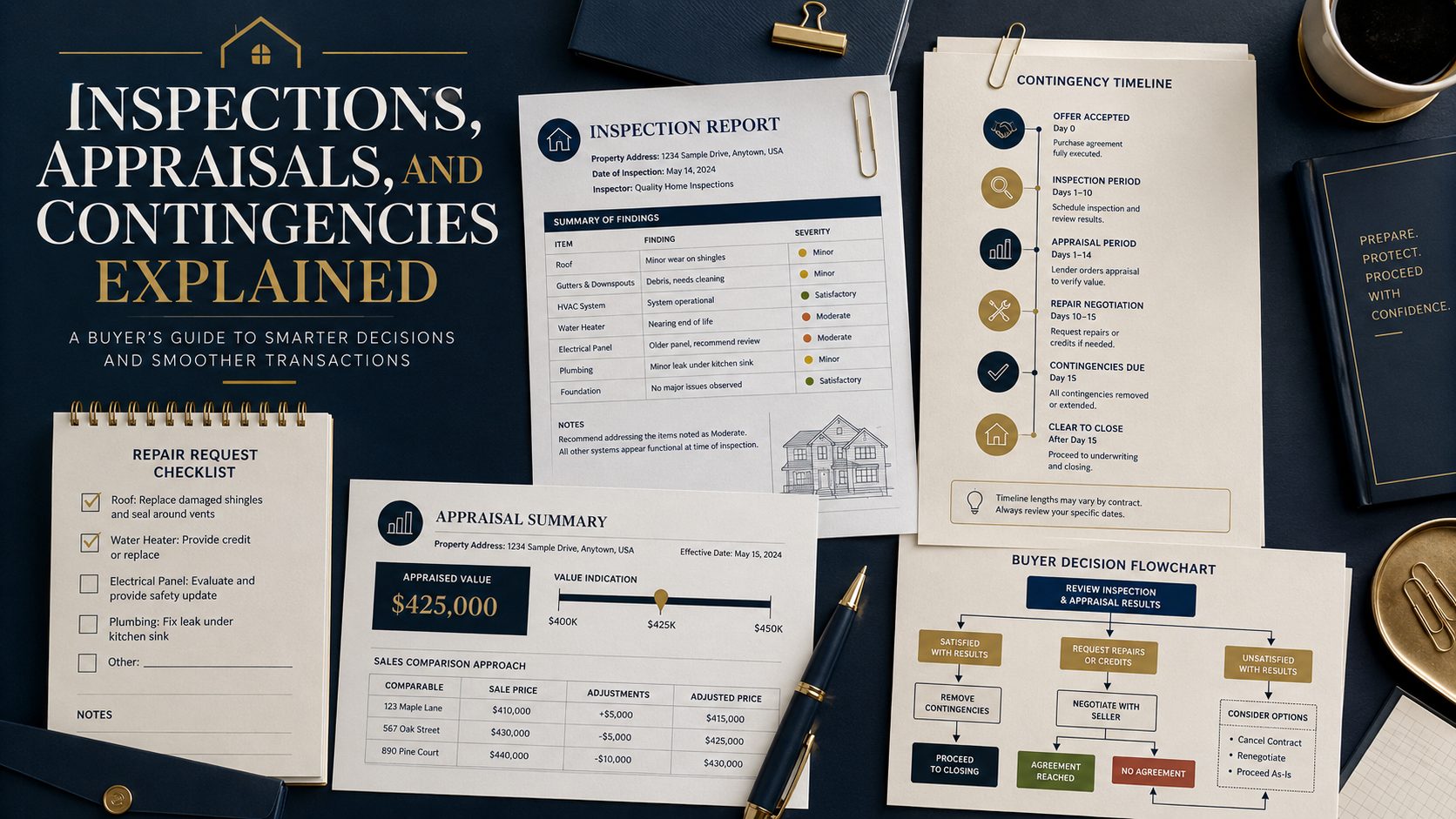
Inspections, appraisals, and contingencies are often discussed together, but they serve different purposes. Understanding each one helps buyers evaluate risk and make informed choices when structuring an offer.
Inspections examine condition
A general home inspection reviews accessible systems and components. Depending on the property, buyers may also consider roof, foundation, sewer, chimney, pest, pool, electrical, or other specialists. The goal is to learn about condition, maintenance, safety, and potential future costs.
The appraisal supports the lender
An appraisal is an independent opinion of value, usually ordered for the lender. It helps the lender assess collateral for the loan. It is not a substitute for an inspection and does not guarantee the property is free of defects.
Contingencies create contractual rights
Inspection, appraisal, and loan contingencies can give a buyer defined options within specified time periods. Those rights depend on the contract language and whether a contingency was included, modified, or removed.
Deadlines matter
Offer acceptance starts a timeline. Schedule inspections quickly, review reports carefully, track lender progress, and document decisions. Missing a deadline can change the options available.
Possible responses to new information
Depending on the contract and circumstances, a buyer may proceed, request repairs or credits, renegotiate, or cancel under a valid contingency. Sellers are not automatically required to agree to a request.
Balance competitiveness with understanding
Reducing contingencies may make an offer more attractive, but it can also shift risk to the buyer. The right approach depends on the property, disclosures, financing, market, and personal risk tolerance.
I can help you coordinate the real estate process while inspectors, lenders, appraisers, and legal professionals provide their specialized guidance.
