
 Facebook
 X
X
 Pinterest
 Copy Link
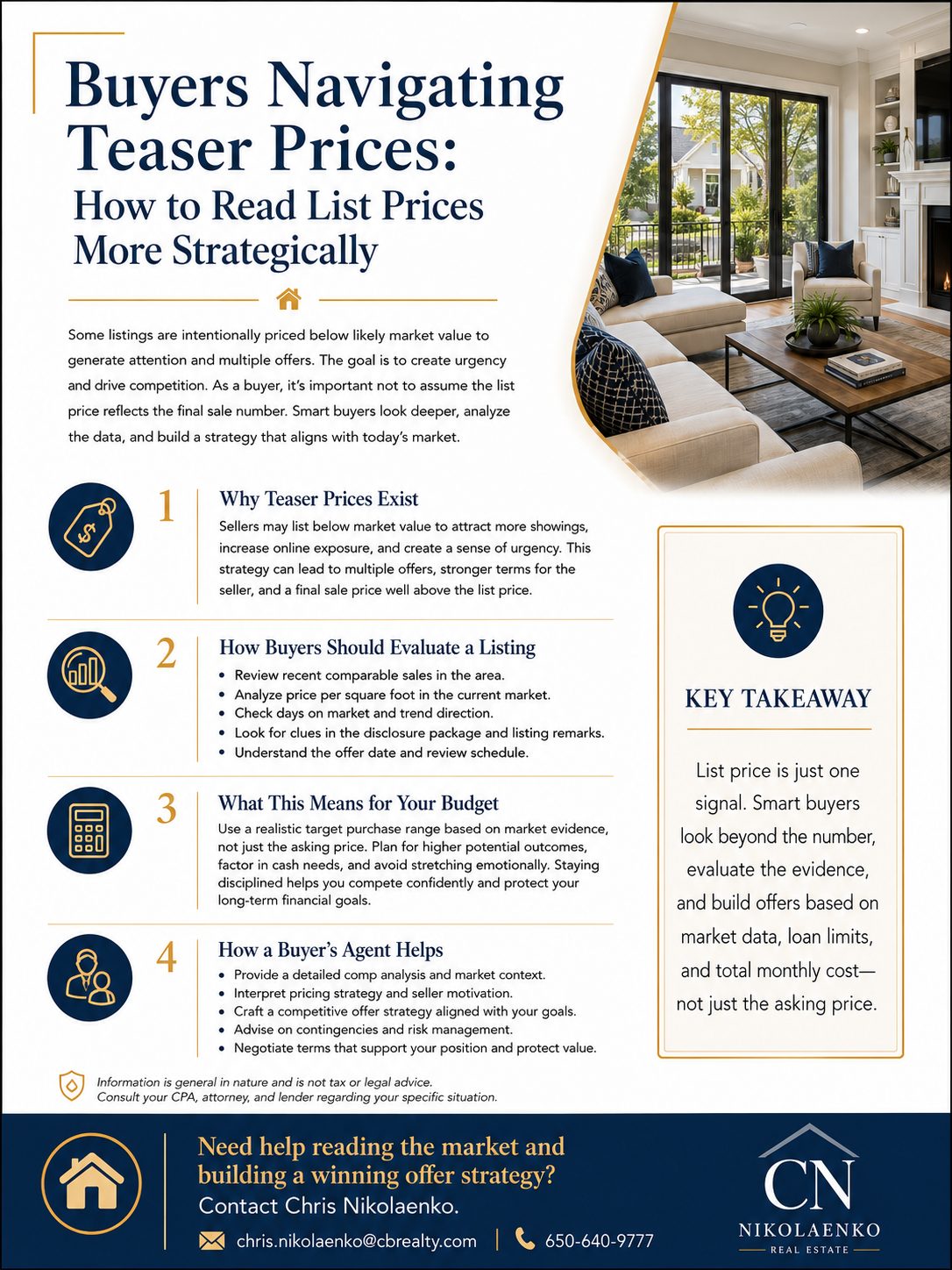
Some Silicon Valley homes are listed below the price the seller expects to accept. This “teaser pricing” strategy is designed to increase online visibility, attract more showings, and create competition. Buyers who treat the list price as a promise can be caught off guard.
Why sellers use teaser prices
Real estate search portals organize listings around price bands. A lower list price can place a home in front of more buyers and generate early activity. When several buyers engage at once, the seller may receive multiple offers.
Use market evidence, not the asking price alone
Review recent comparable sales, current competition, property condition, location, lot, and market direction. Also consider how long the property has been available and whether the offer date or agent remarks suggest expected competition.
Set your limit before offers are due
Your maximum should reflect both market value and your own financial plan. Include property taxes, insurance, HOA costs, maintenance, and potential improvements. A winning offer that creates long-term strain is not a good outcome.
Strengthen the terms you can control
Price is important, but sellers also evaluate financing, deposit, contingencies, appraisal exposure, and timing. A carefully structured offer may compete effectively without simply being the highest number.
Be ready for more than one outcome
If the home is priced to generate competition, decide in advance how you will respond to counters or multiple-offer instructions. Emotional discipline protects your goals.
I can help you interpret pricing signals, analyze comparable sales, and build an offer strategy grounded in both the market and your budget.
