
 Facebook
 X
X
 Pinterest
 Copy Link
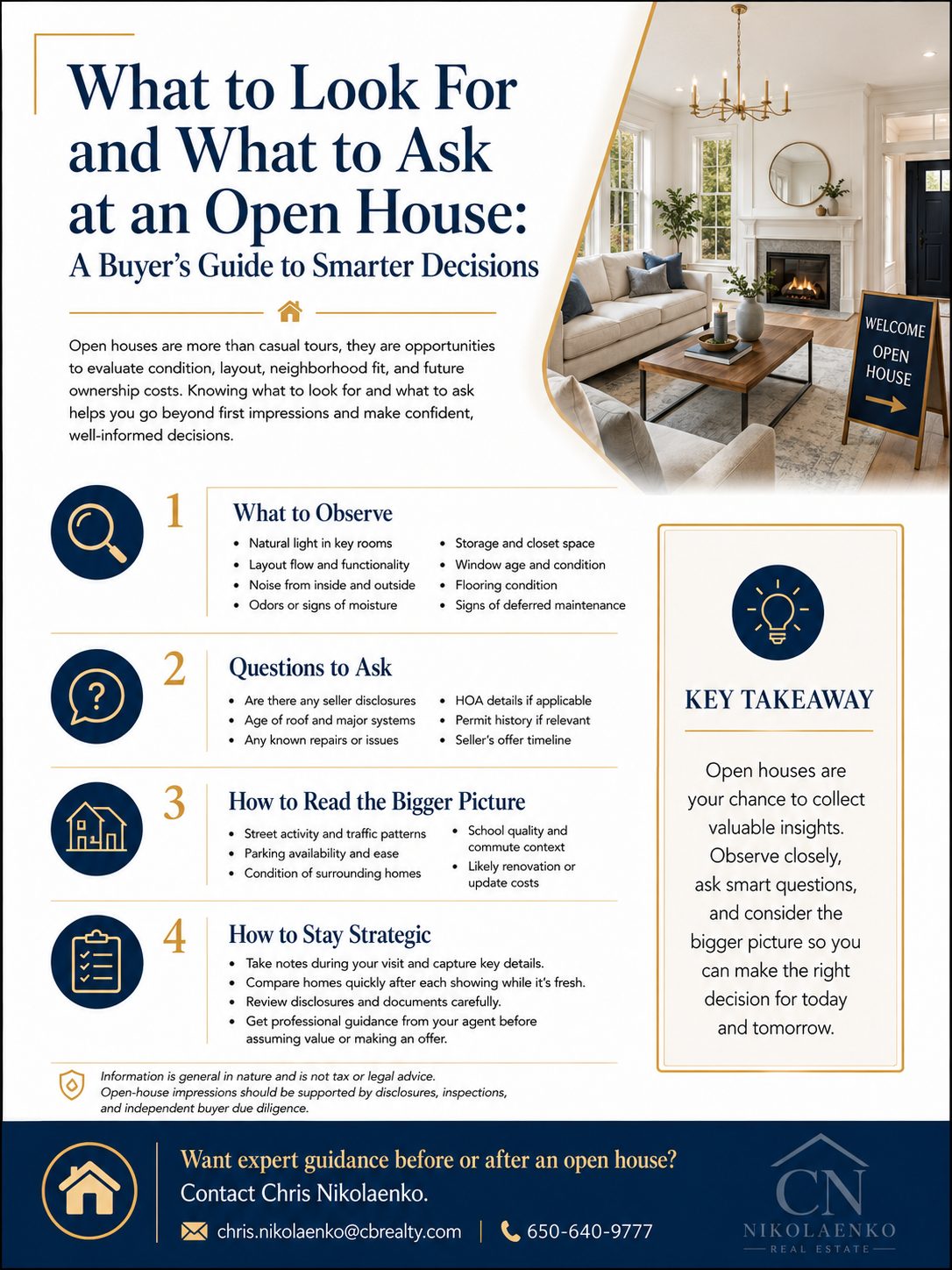
An open house is more than a first impression. It is an opportunity to study the property, understand its condition, and gather information that may shape your offer. A systematic approach helps buyers look beyond finishes and furniture.
Observe how the home lives
Notice natural light, room proportions, storage, traffic flow, noise, temperature, and views. Look at the relationship between the kitchen, living spaces, bedrooms, yard, and parking. Consider whether the layout supports your daily routines.
Look for signs of maintenance
Visible staining, odors, uneven floors, cracked surfaces, aging windows, or recent patchwork deserve follow-up questions. These clues do not necessarily indicate a major problem, but they can help focus later inspections.
Ask questions that create context
- How old are the roof and major systems?
- Are there seller disclosures available?
- Have permits been obtained for additions or remodeling?
- Are there HOA documents, restrictions, or upcoming assessments?
- What is the seller’s preferred timing?
Study the setting
Walk the block if possible. Pay attention to traffic, parking, neighboring properties, nearby schools, parks, shops, and commute routes. A beautiful interior cannot change the location, so evaluate both together.
Keep the big picture in view
Take notes and photos only when permitted, then compare the property with your must-haves and budget. Do not assume a casual comment at an open house replaces written disclosures, professional inspections, or contract advice.
I can help you prepare for open houses, interpret what you see, and decide which properties deserve a closer look.
