
 Facebook
 X
X
 Pinterest
 Copy Link
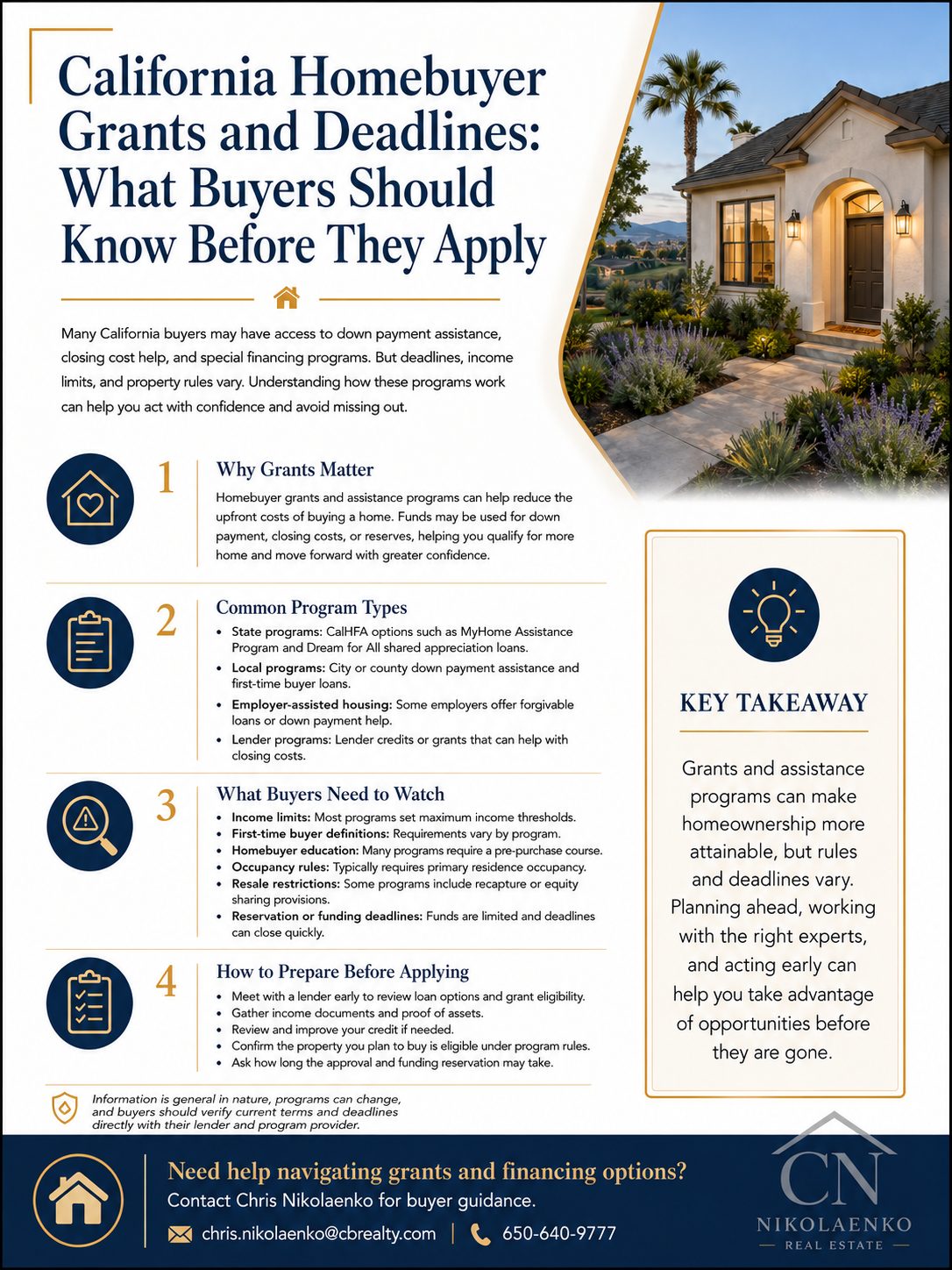
Down payment and closing-cost assistance can make homeownership more attainable, but program names alone do not tell the whole story. Eligibility, funding, repayment terms, lender participation, and deadlines vary, so buyers should investigate early.
Start with current program rules
California assistance programs do not all work the same way. For example, CalHFA’s MyHome Assistance Program is a deferred-payment junior loan, not a grant. Under current CalHFA guidance, assistance may be available up to the lesser of 3.5% of the purchase price or appraised value with an eligible government loan, or 3% with an eligible conventional loan. Program availability, income limits, lender requirements, and funding can change, so verify the current rules with CalHFA and an approved lender.
Eligibility is more than income
Programs may consider household income, first-time buyer status, property location, purchase price, occupancy, credit, debt ratios, education requirements, and the source of your down payment. “First-time buyer” can sometimes mean someone who has not owned a primary residence during a defined period.
Ask how the money must be repaid
Some assistance is a true grant. Other programs create a second loan, require repayment upon sale or refinance, or share in future appreciation. Understand the long-term cost before comparing it with other financing options.
Confirm funding and timing
Programs can change, pause, or run out of funds. Ask whether money is currently available, how long approval takes, which lenders participate, and whether the process fits the contract timeline.
Prepare before shopping
- Review income and asset documentation
- Meet with an approved or experienced lender
- Complete required education early
- Compare total monthly payment and cash needed
- Keep backup options available
I can help you coordinate the property search with financing professionals so assistance requirements are considered before you write an offer.
